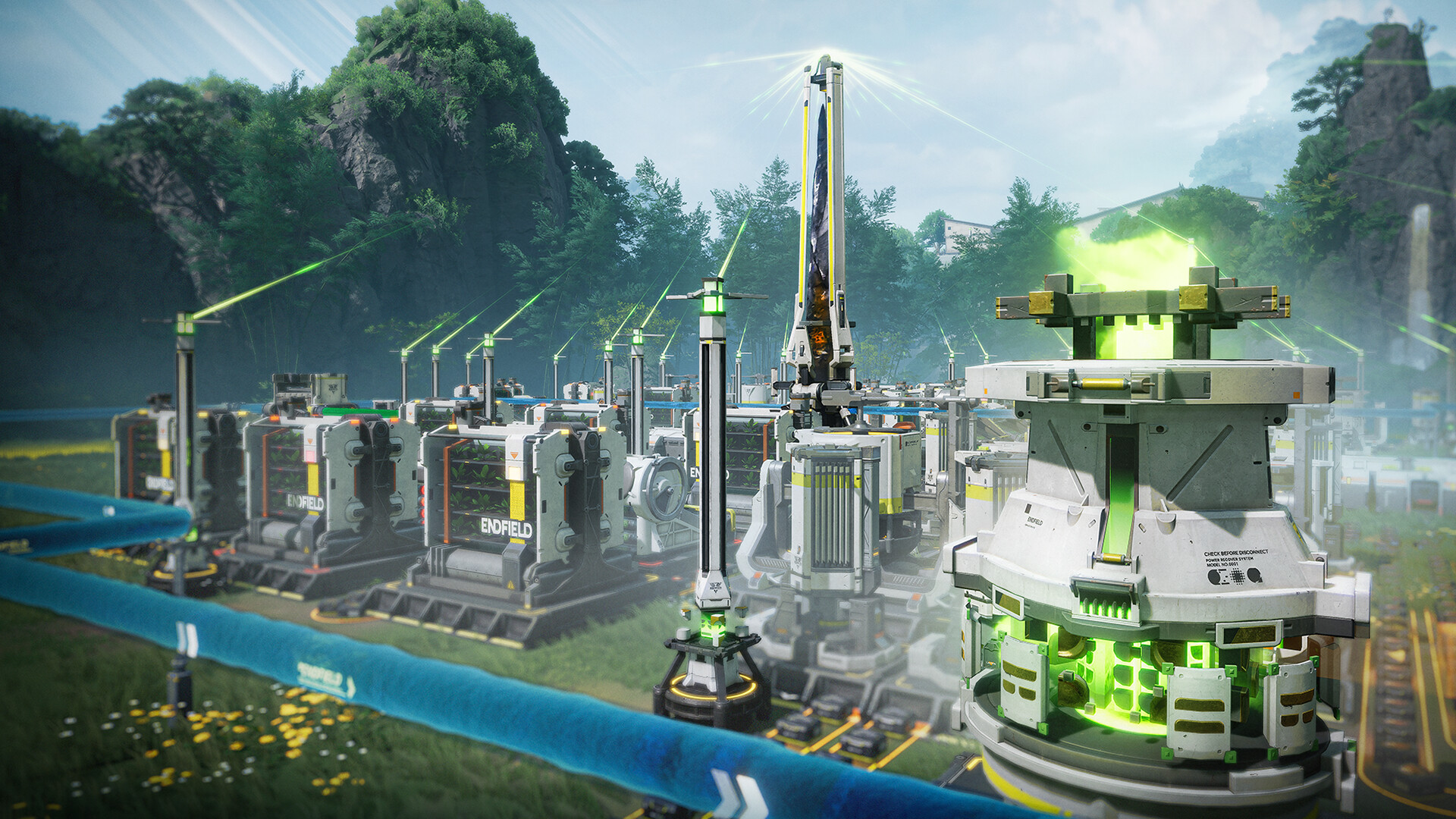
If you're coming into Arknights: Endfield expecting the tower-defense formula from the original Arknights, drop that expectation immediately. Endfield is a fully open-world action RPG with a base-building and automation layer that plays closer to a factory-sim than a tactics game. That combination — real-time combat squads plus production chains — is exactly why new players feel overwhelmed in the first few hours. Here's how to get both halves of the game working for you instead of against you.
Understand the AIC before you touch combat
The Automated Industry Complex, or AIC, is the core system underneath everything else in Endfield. Think of it as your personal factory and command center: production lines that keep running even while you're out exploring Talos-II. The AIC pulls in raw materials you gather in the field and converts them into gear, medicine, food, and explosives — the consumables and upgrade materials that fuel your operator team.
Base management isn't optional flavor here; it's a core pillar of progression. Your base produces materials passively, so the earlier you get a functioning production chain running, the less time you'll spend manually farming later.
For your very first setup:
- You'll start with Portable Originium Rigs — functional, but limited. Upgrade to Electric Mining Rigs as soon as the option unlocks.
- Electric Rigs need power, so set up a Relay Tower and connect Electric Pylons to keep automated resource gathering running without your input.
- Don't over-invest in your first base layout. Early production chains get replaced quickly as you unlock better rigs and facilities, so keep it functional rather than perfect.
Building an operator squad that works
Combat in Endfield revolves around a party of four operators that you actively control in real time, chosen from six classes: Guard, Caster, Striker, Vanguard, Defender, and Support. Guard, Caster, and Striker generally fill the damage-dealer role, while Vanguard, Defender, and Support lean into utility and survivability.
The single most useful piece of advice for a new squad: pick one damage type — Arts or Physical — and build around it early. Splitting your limited resources evenly between both damage types in your first few hours slows down every operator's growth. Once you have a stable Arts or Physical core, branch out.
A workable starting structure looks like:
- One or two damage-focused operators (Guard/Caster/Striker) matching your chosen damage type
- One Defender or Vanguard to hold aggro and create openings
- One Support to keep the squad topped up or buffed
Learn the stagger mechanic early
Endfield's combat has a stagger system that's easy to miss if you're just mashing through fights: filling an enemy's stagger meter triggers a finisher attack that restores skill points and deals significantly more damage than a normal hit. Ignoring stagger means fighting the long, inefficient way — trading hits until the enemy dies rather than breaking their guard and capitalizing on the opening.
Practically, this means:
- Prioritize skills and attacks that build stagger fast over raw damage numbers, especially against tougher single enemies.
- Time your operator swaps around stagger windows — landing a finisher with your hardest-hitting operator active is far more efficient than doing it with whoever happens to be on the field.
- Treat stagger like a resource-generation mechanic, not just a stun. The skill points it refunds are what let your squad chain abilities instead of falling back to basic attacks.
Exploration and the open world
Because Endfield is open-world rather than mission-based, a lot of your early materials come from simply exploring Talos-II — gathering nodes, side encounters, and points of interest feed directly into your AIC production chains. Don't rush past the map to chase main story beats; a slower, more thorough first pass through each region pays off in base materials you'd otherwise have to grind for later.
Putting it together
The mistake most new players make is treating Endfield like either a pure combat game or a pure builder game, when it's designed to be both at once. Get your AIC running on autopilot with Electric Rigs and a Relay Tower, commit your operator team to one damage type, and learn to read stagger meters instead of just holding down attack. Once your base is quietly generating materials in the background, your combat squad has room to actually get strong — and that loop is what Endfield's entire progression curve is built around.